
Best Japan SIM Card for Tourists

Staying connected in Japan is crucial, whether you’re navigating bustling Tokyo or exploring serene Kyoto. Public Wi-Fi is available, but it can be limited and unreliable. A Japan SIM card offers a more convenient and secure solution for staying online throughout your trip.
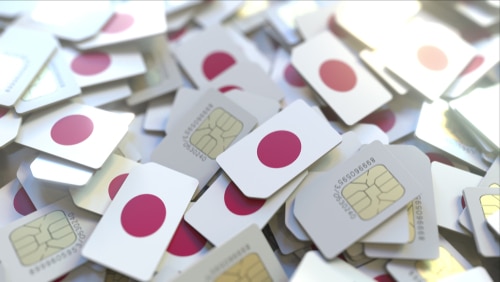
Japan Sim Card

Why Buy a SIM Card for Japan?

Unless your current provider has affordable international roaming packages, here’s why a Japan SIM card could work out best for you:

  • Convenience: Stay connected on-the-go with data access for maps, translation apps, and communication.
  • Reliability: Avoid the frustration of unreliable Wi-Fi, especially in rural areas.
  • Security: Public Wi-Fi can be risky for sensitive information. A SIM card provides a secure connection for online banking and social media.
  • Affordability: Japan SIM cards are generally inexpensive, especially compared to roaming charges.
 

How to Choose a SIM Card?

You have two main options for a Japan connection: a physical SIM card or an eSIM. 

The best Japan SIM card for you depends on your travel style and needs. Consider these factors:

  • Data allowance: How much data will you need for browsing, streaming, and social media?
  • Trip duration: Choose a plan that matches your travel length, with options ranging from a few days to several weeks. Alternatively, choose a plan that can be extended in case you run out of data, or you extend your stay. 
  • Network coverage: Depending on your trip itinerary, you might want to choose a carrier that provides coverage wherever you might wander. Major carriers like Docomo and SoftBank offer the widest coverage, but smaller providers may have more competitive rates.
  • Voice calls: Do you need to make local calls in Japan? If not, a data-only SIM card will be sufficient.
 

Top Providers for SIM Cards in Japan

Several providers offer excellent Japan SIM card options for tourists. Here are some popular choices, with both physical SIM and eSIM options available:

  • mobal: Known for its user-friendly website and excellent English support.
  • Sakura Mobile: Offers unlimited data plans on the Docomo network (physical SIM only), ideal for heavy data users.
  • Nippon SIM (Docomo): Provides a variety of data packages at competitive rates (physical and eSIM options).
  • IIJmio Travel SIM: Offers good value for shorter trips, with options for data and voice calls (physical SIM only).
  • Airalo: Offers convenient eSIM plans with data packages for various durations.

Mobal Sim Card Japan
Sakura Mobile Sim Card Japan
IIJMio Sim Card Japan
Airalo
Nippon Sim Sim Card Japan

How Much Does a Japan SIM Card Cost?

Prices vary depending on the provider, data allowance, plan duration, and whether it’s a physical SIM or eSIM. Generally, expect to pay between ¥3,000 (US$22) and ¥10,000 (US$74) for a Japanese SIM card.

Where to Buy a SIM Card?

You have two main options for purchasing a Japan SIM card: before your trip or onsite.

Before the Trip Outside Japan:

Several providers offer online ordering with international shipping (mostly for eSIMs).

In Japan:

  • At Arrival at Airport: SIM cards (both physical and eSIM) are readily available at kiosks in major Japanese airports like Narita and Haneda (Tokyo) or Kansai (Osaka). This is the most convenient option especially if you arrive late at night for example.
  • Convenience Stores: Popular chains like 7-Eleven, FamilyMart or Lawson sell physical SIM cards. 
  • Electronics Stores: Larger electronics stores like Bic Camera and Yodobashi Camera offer a wider selection of physical SIM cards. These stores are in most major cities and staff can help you activate your newly purchased SIM card.
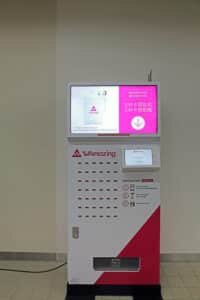
Sim Card Kiosk in Japan

How to Activate My SIM Card for Japan?

Activation instructions vary depending on the provider. Typically, you’ll receive activation instructions with your SIM card, which might involve:

  • Inserting the physical SIM card into your unlocked phone. If your phone is locked to a specific carrier, you may need to unlock it before using a Japan SIM card.
  • Scanning a QR code for eSIM activation. This will download and install the eSIM profile onto your phone.
  • Following a provided online activation link. You may need to enter some information from your SIM card packaging.
  • Manually entering an activation code. This code is usually provided on the SIM card packaging or activation instructions.


Useful Tips

  • Restart your phone after completing the activation process.
  • Check your data connection by browsing the internet or using a data-dependent app.
  • If you encounter any issues, contact your SIM card provider’s customer support for assistance.


Whether you choose a physical SIM card or a convenient eSIM, having a Japan connection will enhance your travel experience. By considering your data needs, trip duration, and preferred provider, you can find the perfect SIM card solution for exploring the wonders of Japan. So, ditch the unreliable Wi-Fi worries and embrace a seamless online experience throughout your Japanese adventure!
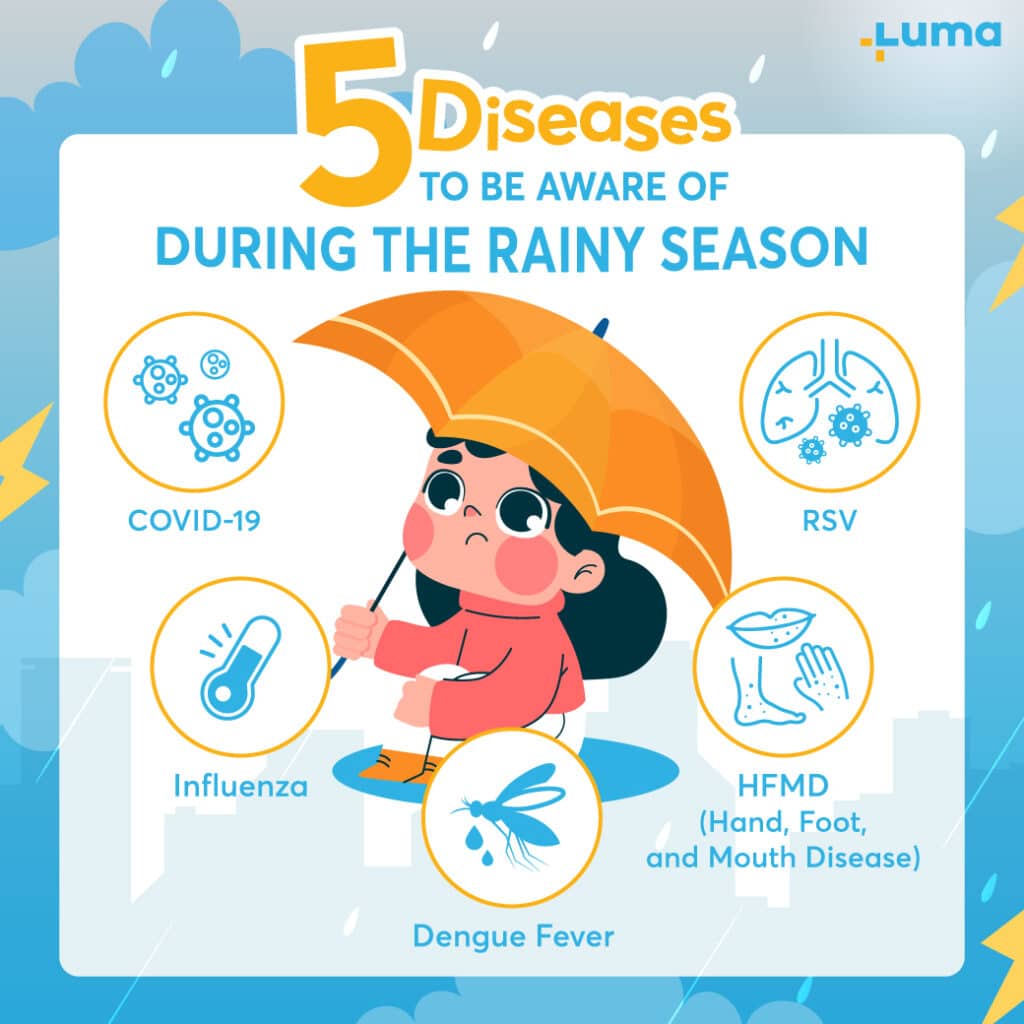
What Diseases Are Affecting Children? LUMA Shares 2024 Statistics

As we approach the midpoint of 2024, from a health standpoint, the world seems to be returning to normalcy post-COVID-19. However, for children’s health in Thailand, the lingering effects of the pandemic are still evident. LUMA, a health insurance provider, has observed a significant increase in child health issues compared to pre-COVID times, based on their interactions with hospitals across Thailand.

what diseases are affecting children

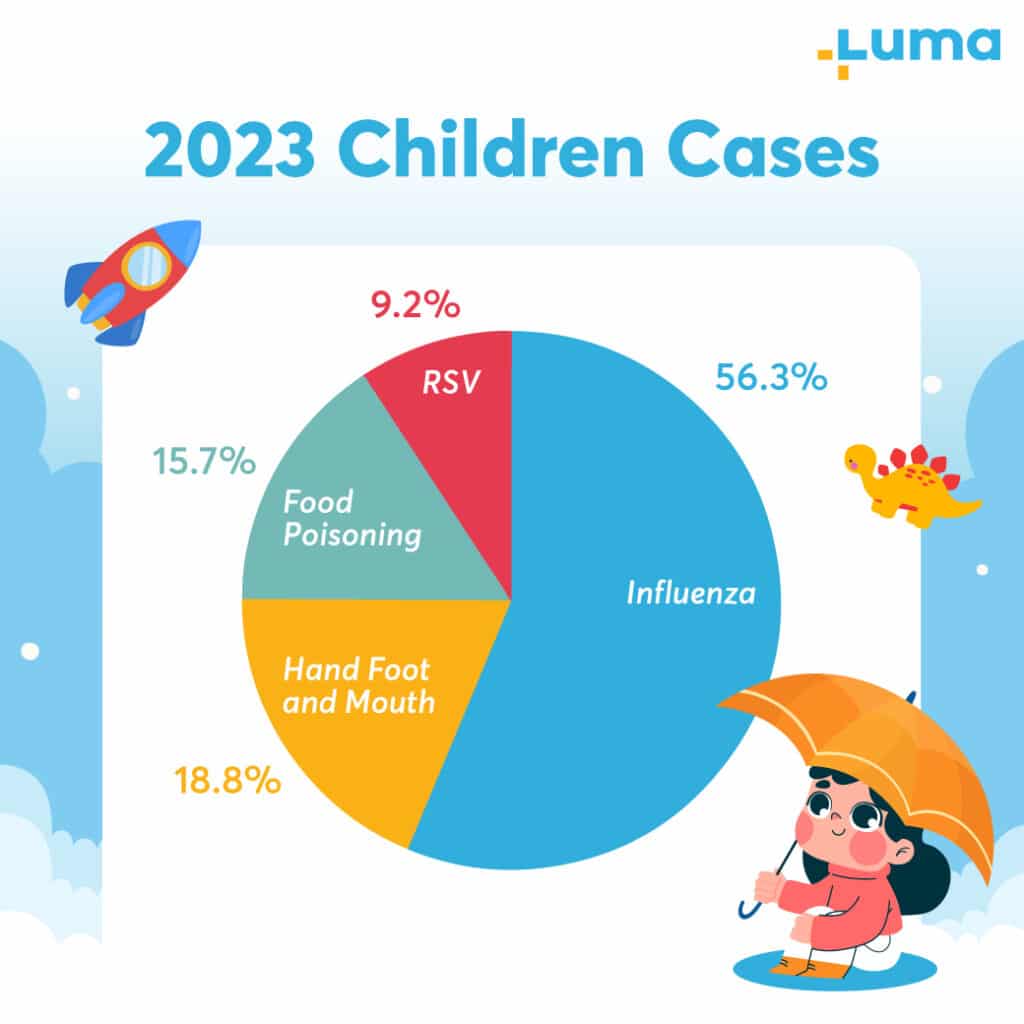
Having analyzed the data on all children insured with LUMA, the top reasons in children visiting hospitals were as follows:

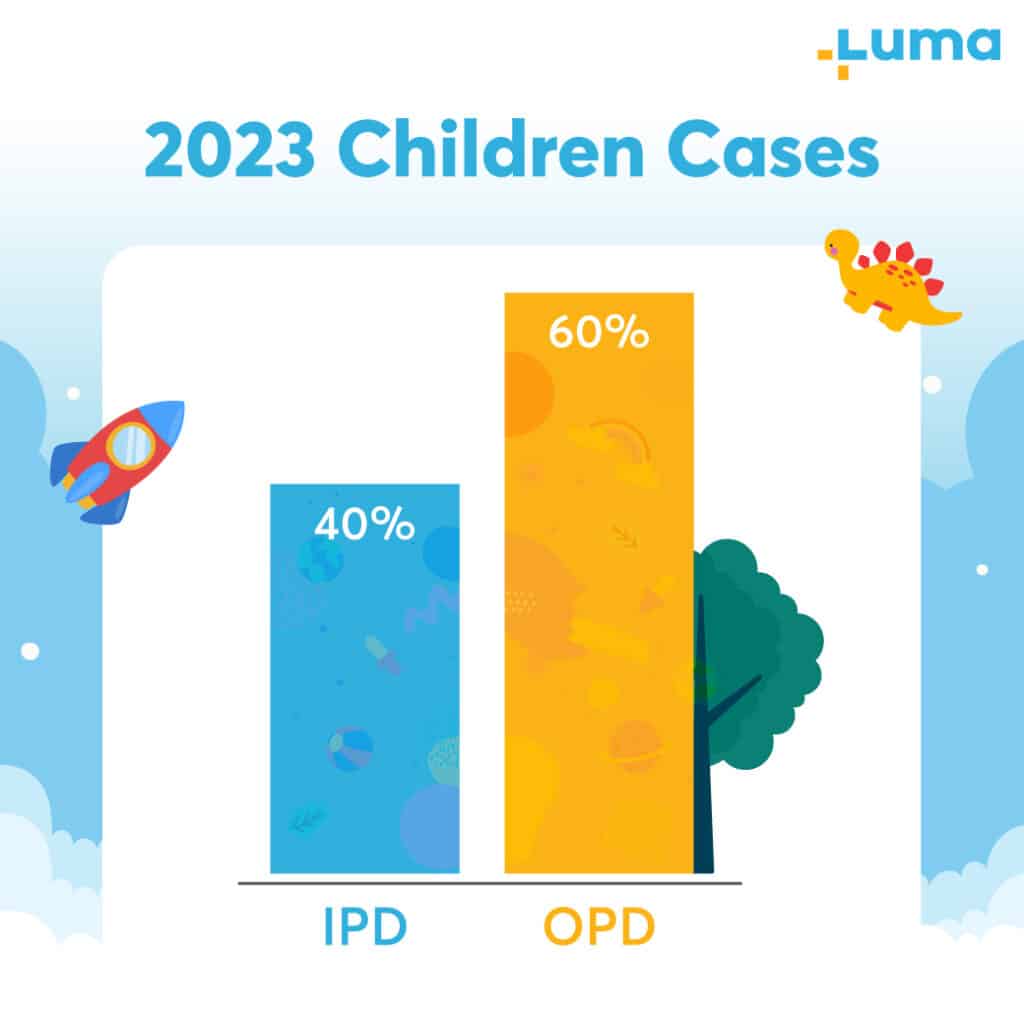
2023 children disease cases

Key Medical Statistics

Influenza

Occurrence: Over 50% of child health cases in 2023.

Age Group: Mostly affects children under 10, especially those in kindergarten.

Common Symptoms: Fever, Cough, Sore throat, runny nose, muscle pain.

Cost per Admission: 70,000 THB – 95,000 THB; top-tier hospitals often exceed 100,000 THB.

Peak Season: During the rainy season.

Typical Length of Stay: 2-5 days.

Food Poisoning

Occurrence: almost 20% of child health cases in 2023.

Age Group: Mostly affects children under 7 years old

Common Symptoms: Diarrhea, nausea, fevers, and headaches.

Cost per Admission: 30,000 THB – 62,000 THB.

Peak Season: High temperatures during the summer.

Typical Length of Stay: 1-3 days.

Hand Foot and Mouth

Occurrence: Over 15% of child health cases in 2023.

Age Group: Majority of children under 9 years old.

Common Symptoms: Fever, painful blisters around the mouth, hands and feet, loss of appetite.

Cost per Admission: 17,000 THB – 99,000 THB

Peak Season: during the rainy season.

Typical Length of Stay: 1-6 days.

RSV

Occurrence: almost 10% of child health cases in 2023.

Age Group: children under 5 years old

Common Symptoms: Fever, severe coughing, wheezing, difficulty breathing.

Cost per Admission: Average cost of 95,000 THB per admission.

Peak Season: End of rainy season, beginning of winter season

Typical Length of Stay: 2-5 days

IPD OPD Children Statistics

Inpatient (IPD) Admissions

Occurrence: 40% of LUMA’s children’s portfolio in 2023.

Cost per Admission: 25,000 THB – 120,000 THB.

Typical Length of Stay: 1-4 days, some cases up to 7 days

The Impact of Infectious Diseases

Thailand has seen spikes in increases of infectious diseases among children during the reopening of schools in particular, however, over the past 2 years. The most common conditions requiring medical attention include RSV, Hand Foot and Mouth disease, Influenza, and Food Poisoning. LUMA’s data indicates that infectious diseases are significantly impacting children’s health, necessitating both inpatient and outpatient medical care.  More importantly, the severeness of infectious diseases, especially Hand Foot and Mouth in 2024, LUMA witnessed an admission up to 9 days, with a total cost of over 270,000 THB for the admission.

Recommendations for Parents

LUMA advocates for home care for mild cases to avoid the stressful hospital environment and potential exposure to other infections. For instance, simple diseases are common illnesses that can usually be treated without needing a hospital stay. These include things like:

“In the vast majority of cases, staying in a hospital isn’t helpful and can even be risky by being exposed to hospital-acquired infections. It’s better to be treated at a doctor’s office (outpatient) or at home.” Dr. Gerard Lalande, Chief Medical Officer at LUMA.


However, some situations might require a hospital stay, especially for:

Doctors follow guidelines from medical societies, including those for children, to decide the best treatment.  When treatment plans are unclear, it is crucial for parents to ask their doctor for a clear understanding.

Conclusion

The post-COVID era has brought new challenges for children’s health in Thailand. The increased prevalence of infectious diseases and the corresponding rise in medical costs highlight the importance of comprehensive health insurance and informed medical decisions for parents. The data collected by LUMA is only of those children who are insured and visited a doctor, there is still a worrying number of children who may not be insured, resulting in delay or hesitance to visit a doctor to obtain the correct medical treatment required.  By understanding the current health landscape, parents can better protect their children’s well-being.

How much does travel insurance to Vietnam cost?

The cost of travel insurance to Vietnam varies depending on several factors, including:

  • Trip duration
  • Medical coverage
  • Travel benefits
  • Single trip or multiple trip policy


You can expect to pay approximately USD 6/day for a standard travel insurance plan for 1 week. If you plan a longer trip, for example, 1 month, the cost per day can be as low as USD 1.50/day. Keep reading to see sample prices for LUMA’s Travel Insurance for Vietnam:

vietnam travel insurance

How Much Can You Save with Travel Insurance in Vietnam?


Medical Expenses

Medical care in Vietnam is not always cheap, and unexpected medical situations can quickly become expensive without travel insurance. Here are some examples of medical costs in Vietnam:

  • Minor stitches: 30 – 200 USD for an outpatient consultation
  • Accident requiring a cast: 70 – 200 USD for an outpatient consultation
  • Bacterial diarrhea: From 40 USD for an outpatient consultation to over 1,500 USD for hospitalization
  • Dengue fever: From 80 USD for an outpatient consultation, and can reach 4,000 USD+ for an Inpatient stay
  • Major surgeries: From 4,000 to 25,000 USD, but can go higher depending on the severity


Motorbike Accidents in Vietnam

Motorbikes are popular in Vietnam, but they also pose a high risk of accidents. Here’s a look at approximate costs for motorbike accident injuries:

  • Simple bone fracture: 800 USD or more
  • Severe bone fracture: 7,000 USD or more
  • Multiple bone fractures: 25,000 USD to 50,000 USD or more
  • Internal bleeding: 12,000 USD or more


Trip Cancellations & Delays

Unexpected events can mess up your Vietnam trip and cost you money if you can’t cancel and get reimbursed.

Travel insurance with trip cancellation coverage can be your safety net. Here’s the deal:

  • Get Reimbursed if illness, family emergencies, or even flight cancellations force you to ditch your trip, travel insurance can cover prepaid expenses like flights, hotels, and tours.
  • Read the Fine Print: Before you buy, understand what situations trigger coverage and what’s excluded. This avoids surprises later.
LUMA Care Application
Contact Us

Copyright © 2026 lumahealth.com. All Rights Reserved.   Privacy Policy & Terms of Conditions