

China Visa Free Guide for Visa Exemptions to China

Planning a trip to China and wondering which countries are visa free to China? If you’re from one of the lucky countries on the China visa free countries, you might not need a visa. This guide will outline the countries that enjoy China visa free travel to Mainland China and provide essential information about visa-free transit options.


Countries with Mutual Visa Exemption Agreements with China

China has established mutual visa exemption agreements with several countries. This means citizens from these countries can enter Mainland China without obtaining a visa for a specific duration.

Extension of this rule varies based on the country. Check with your respective China embassy in your country to check whether the rule is still valid.


Countries with 30-day Visa Free Trip to China

Duration of stay allowed: 30 days

Purpose of visit: tourism, travel, business, visit family/friends.

Other purpose or duration, will need to apply for the right visa matching their purpose of stay in China.


List of countries with mutual visa exception agreements with China to stay up to 30 days visa-free:

  • Andorra
  • Armenia
  • Australia
  • Austria
  • Barbados
  • Belarus
  • Belgium
  • Bosnia and Herzegovina
  • Brunei
  • Bulgaria
  • Croatia
  • Cyprus
  • Denmark
  • Dominica
  • Estonia
  • Fiji
  • Finland
  • France
  • Germany
  • Greece
  • Grenada
  • Hungary
  • Iceland
  • Ireland
  • Italy
  • Japan
  • Latvia
  • Liechtenstein
  • Luxembourg
  • Malaysia
  • Malta
  • Mauritius
  • Monaco
  • Montenegro
  • Netherlands
  • New Zealand
  • North Macedonia
  • Norway
  • Poland
  • Portugal
  • Romania
  • San Marino
  • Serbia
  • Seychelles
  • Singapore
  • Slovakia
  • Slovenia
  • South Korea
  • Spain
  • Suriname
  • Switzerland
  • Thailand
  • The Bahamas
  • The Maldives
  • The United Arab Emirates


Reciprocal Visa exemption countries with China:

  • As of February 9 2024, Singapore is exempted from visa for stays up to 30 days in China.
  • Effective March 2024, Thailand signed a mutual visa free agreement with China for stays up to 30 days in China.
  • Effective November 30, 2024; China added 38 countries to the 30 days Visa Free Trip to China list until December 31, 2025.


How to count the 30 days for 30-day Visa Free Trip in China?

From the day you entered China until midnight China time of the 30th day after the entry.


Countries with 15-day Visa Free Trip to China

Effective November 30, 2024 (and until December 31, 2025); China has extended agreement from 15 days visa-free to 30 days visa-free to citizens of the above stated list of countries. 


Transit Visa

If you’re transiting through China, you may be eligible for a transit visa. This allows you to stay in China for a limited period without obtaining a regular tourist visa.

Note: Country before and after China need to be different. This is for travelers in transit only eg travelers must show a connecting ticket to a third country when arriving in China.


Visa-free transit is currently available to 54 nationalities including:

  • Austria
  • Belgium
  • Czech Republic
  • Denmark
  • Estonia
  • Finland
  • France
  • Germany
  • Greece
  • Hungary
  • Iceland
  • Italy
  • Latvia
  • Lithuania
  • Luxembourg
  • Malta
  • Netherlands
  • Norway
  • Poland
  • Portugal
  • Slovakia
  • Slovenia
  • Spain
  • Sweden
  • Switzerland
  • Russia
  • United Kingdom
  • Ireland
  • Cyprus
  • Bulgaria
  • Romania
  • Ukraine
  • Serbia
  • Croatia
  • Bosnia and Herzegovina
  • Montenegro
  • Macedonia
  • Albania
  • Monaco
  • Belarus
  • United States
  • Canada
  • Brazil
  • Mexico
  • Argentina
  • Chile
  • Australia
  • New Zealand
  • South Korea
  • Japan
  • Singapore
  • Brunei
  • United Arab Emirates
  • Qatar


24h Transit Visa to China / 1 Day Transit Visa to China

Travelers on a 24h visa free transit can enter all international airports in China but cannot leave the city where the airport is located.


72h Transit Visa to China / 3 Day Transit Visa to China

Travelers on a 72h visa free transit can only enter through 3 ports in China:

  • Guilin Liangjiang International Airport (cannot leave city)
  • Harbin Taiping International Airport (cannot leave city)
  • Changsha Huanghua International Airport (can travel within Hunan province only)


144h Transit Visa to China / 6 Day Transit Visa to China

Travelers on a 144h visa free transit can enter through 37 ports in China. Certain port require the traveler on this type of transit visa free to remain within the city or province. Double check the rule based on your entry port.


Tips from Frédérique, a Lumanian and former expat in China who regularly visits her son studying in Beijing:

  • It is recommended to carry supporting documents like invitation letters, flight tickets, and hotel reservations matching the stated purpose.
  • If you qualify for visa exemption, you can enter China multiple times. Currently, there are no restrictions on frequency or cumulated total stay days.
  • Minors and adults have the same conditions for visa exemption.


Please note: China Visa Free policies can change including the list of China visa free countries. It’s always recommended to check with the Chinese embassy or consulate in your country for the most up-to-date information before planning your trip.

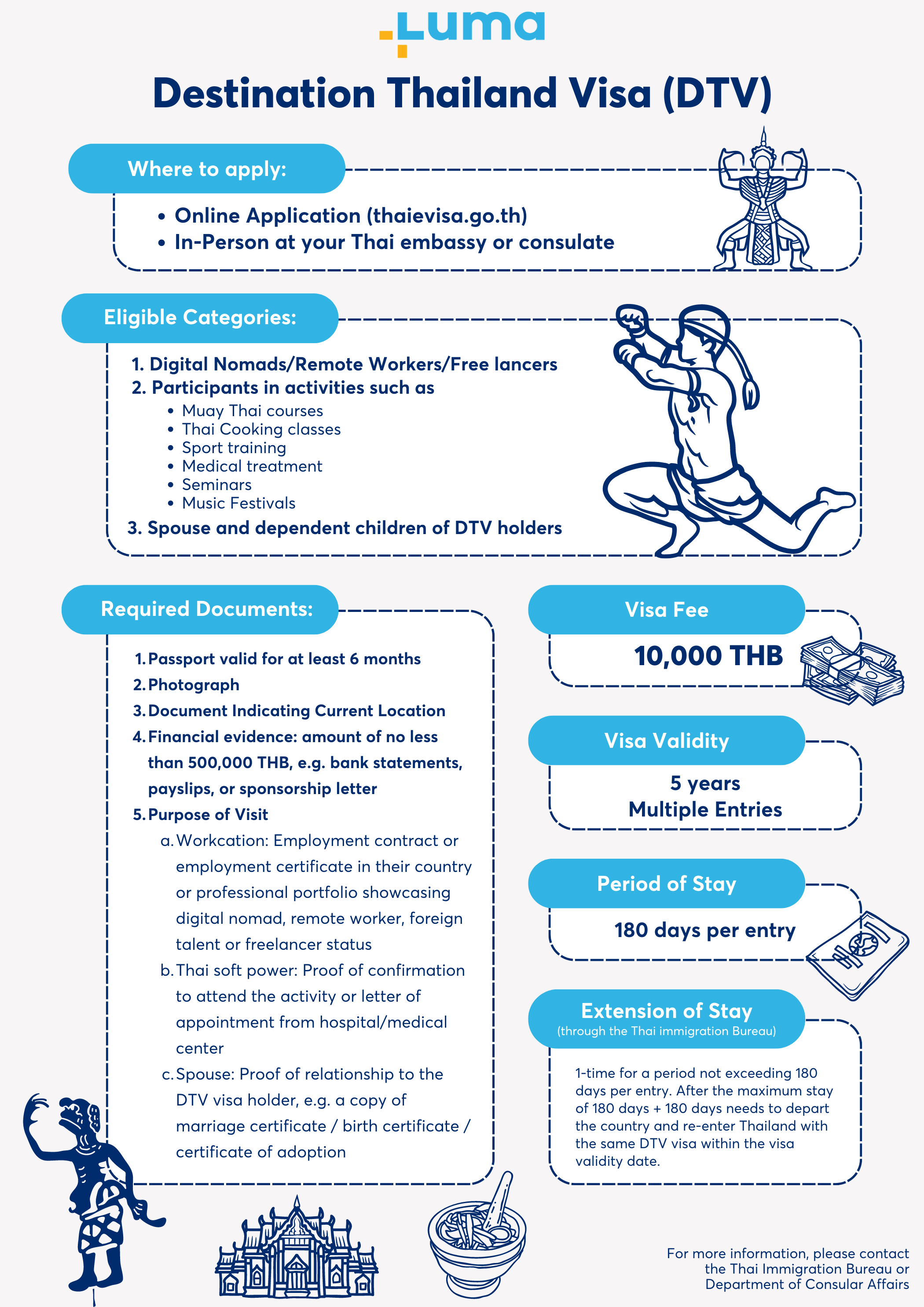
DTV (Destination Thailand Visa) for Digital Nomads in Thailand

As digital nomads and remote workers, your lifestyle may take you to many corners of the world, but Thailand stands out as one of the top destinations. With the Destination Thailand Visa (DTV), Thailand is even more accessible for long-term stays. Coupled with LUMA’s health insurance tailored for digital nomads, you can focus on your work and adventures without worrying about your health coverage.

What are the benefits of a DTV ?

The Destination Thailand Visa (DTV) offers several benefits to digital nomads and long-term visitors. The validity of the visa is for 5 years, and a length of stay of up to 180 days per entry. This type of visa is extendable once per year, providing flexibility for work, travel, and living. The visa promotes ease of doing business, including setting up remote work or collaborating with Thai companies. Additionally, DTV holders can benefit from Thailand’s relatively low cost of living, rich cultural experiences, and excellent transportation networks, making it an attractive destination for those seeking a balanced work and lifestyle environment.

digital nomad

What are the different Destination Thailand Visa Categories?

The Destination Thailand Visa (DTV) offers different categories tailored to various types of long-term visitors:

  1. Workcation (Digital Nomads, Remote Workers, Foreign Talent and Freelancers)
  2. Thai Soft Power related activities (e.g. Muaythai, Thai culinary training and medical treatment)
  3. Dependent – for family members of the primary visa holders.

Each category comes with specific income, investment, or professional requirements, offering long-term residency and numerous perks like ease of travel, work permits, and access to premium healthcare.

What are the requirements for a DTV?

Destination Thailand Visa requirements for Workcation

The Destination Thailand Visa (DTV) for a “Workcation” is designed for remote workers and digital nomads who want to combine work with leisure in Thailand. The requirements include:

1. Employment: Applicants must work remotely for a company located outside Thailand or own a business abroad.

2. Financial evidence: Proof of funds amounting to no less than 500,000 THB. Acceptable documents may include recent bank statements showing sufficient balance, a sponsorship letter from a qualified individual or entity, or other relevant financial documents demonstrating your financial capability to support your stay in Thailand.

Destination Thailand Visa requirements for Thai Soft Power related activities

The Destination Thailand Visa (DTV) for Thai Soft Power-related activities is tailored to professionals and individuals who contribute to promoting Thailand’s culture, arts, and creative industries. The requirements include:

1.Industry Focus: Applicants must work in fields related to Thai Soft Power, such as Thai film and arts, fashion, Thai culinary training, MuayThai, or other cultural and creative industries.

2.Financial evidence: You must provide proof of funds totaling at least 500,000 THB. Acceptable forms of documentation include recent bank statements that reflect a sufficient balance, a sponsorship letter from a recognized individual or organization.

Destination Thailand Visa requirements for medical treatment

The Destination Thailand Visa (DTV) for individuals seeking medical treatment offers long-term residency for those who wish to receive ongoing healthcare in Thailand. The requirements include:

1.Purpose: Applicants must seek medical treatment in Thailand, such as long-term care, rehabilitation, or specialized treatments offered by Thai healthcare providers.

2.Healthcare Facility: Proof of confirmation or letter of appointment from an accredited hospital or medical center in Thailand.

3.Financial evidence: You must provide proof of funds totaling at least 500,000 THB. Evidence which are accepted could be recent bank statements that reflect the financial requirement is met, or a sponsorship letter.

4.Medical Records: Applicants may need to provide medical records justifying their treatment in Thailand.


Visa Duration: Depending on the treatment, the visa can be extended for family members or caregivers accompanying the patient.

DTV Visa requirements for Spouse and dependents

dtv destination thailand visa

Health Insurance Requirements for the DTV

Currently, health insurance is not a mandatory requirement for the DTV, however it is highly recommended to get comprehensive health insurance coverage to ensure that any unexpected medical expenses, such as illness, or injuries are fully taken care of.


LUMA offers full coverage international health insurance plans, allowing you to travel within the region and still be covered for medical treatments.  Most suited for those interested in the DTV, whether you are returning home for a break, or exploring local wonders, LUMA can offer medical coverage to ensure you are protected throughout the year.  With proper International Private Medical Insurance (IPMI) plans, you are able to visit the leading international hospitals and clinics, and have the confidence that there are English speaking staff and doctors to ensure that you are getting the best and correct treatment required.

How to apply for a Destination Thailand Visa?

Gather Required Documents:

Choose Your Application Method:

Online Application: Visit the official Thai e-visa website, follow the prompts to complete the application form, and upload the necessary documents.


In-Person Application: If you prefer to apply in person or if online applications are not available, visit the nearest Thai embassy or consulate.


IMPORTANT: You must apply for your DTV before you arrive in Thailand, you will not be able to apply for the Destination Thailand Visa whilst currently in Thailand.

Submit Your Application and Pay Fees:

After completing the application and uploading the required documents, submit it and pay the applicable visa fees.

Await Visa Approval:

Processing times for the DTV can vary, with some cases taking a few days, and some can take a few weeks.  There is no set timeframe for the Visa Approval, and each case is unique as additional supporting documents can be requested. You may be able to track your application status online or by contacting the embassy or consulate directly.

Collect Your Visa:

Upon approval, you can either collect your visa in person at the embassy or consulate, or it may be sent to you by mail.

How much does a Destination Thailand Visa Cost?

The cost of a Destination Thailand Visa (DTV) is 10,000 THB and is valid for 5 years, with a duration of stay up to 180 days per entry. This fee covers the processing and application costs associated with obtaining the visa.

Do I pay tax on my foreign income while holding a DTV?

Depending on the length of your stay, you could be considered as a tax resident by the Thai government. When residing over 180 days of a calendar year in Thailand, you may be liable to pay Thai taxes on your foreign income as you are considered a tax resident, even if you are holding a DTV.

In regards to avoiding your income being taxed twice, this will depend on each country as there are some Double Tax Agreements with Thailand in place.

Enquire about health insurance for your DTV

Finding a Pediatrician in Thailand

Relocating to a new country presents numerous challenges, especially for families with young children. Among these challenges, finding a reliable and trustworthy pediatrician is paramount. For expat families in Thailand, the healthcare landscape may seem daunting due to differences in language, medical practices, and healthcare systems. However, securing the right pediatrician is essential for ensuring the health and well-being of your children, providing peace of mind, and navigating the complexities of a new healthcare environment.

Importance of Choosing the Right Pediatrician

Pediatric care is specialized medical care tailored to the unique needs of infants, children, and adolescents. It offers numerous benefits that are crucial for the healthy development and well-being of children. Finding the right pediatrician in a new country can be an overwhelming experience for expat families. 


The challenge lies in locating a pediatrician who not only understands your child’s medical needs but also provides the comfort and reassurance essential for both parents and children in a new environment.

Key Considerations When Looking for a Pediatrician

When considering a pediatrician for your child, there are various factors which can weigh into your decision making process, which can include, the aspects of the pediatrician themself, the location and facilities available of the hospital or medical clinic, as well as communication skills and the approachability of the pediatrician towards your child.

Qualifications and Certifications

Look for a pediatrician with a medical degree from a recognized school and board certification from the Thai Medical Council, indicating they’ve completed specialized pediatric training. Make sure they are licensed to practice in Thailand and have relevant experience. It’s also beneficial if they have additional training in any special areas your child might need, stay updated with ongoing medical education, and are affiliated with reputable hospitals.

Experience and Areas of Specialization

As a parent, it’s also crucial to understand the experience of your child’s pediatrician, as well as the areas of specialization to ensure your child has a trusted, and familiar pediatrician throughout the years as they grow.


Experience

Years in Practice:

Look for pediatricians with several years of experience. They are more likely to have dealt with a variety of health issues.


Reputation:

Ask for recommendations from other parents or expat communities to find a trusted pediatrician.


Hospital Affiliations:

Pediatricians linked with reputable hospitals usually have access to better facilities and a network of specialists.


Areas of Specialization

General Pediatrics:

For regular check-ups, vaccinations, and common illnesses.


Specialized Care:

If your child has specific needs, look for pediatricians specializing in areas like:

Communication Skills and Approachability

Finding a pediatrician in Thailand with good communication skills in English and approachability is essential for expat families. Clear communication ensures you understand your child’s health needs and treatment options, reducing the stress of navigating a new healthcare system.

pediatrician

Overview of Pediatric Healthcare in Thailand

Pediatric healthcare in Thailand is well-developed, offering a range of services for children from infancy to adolescence. Major cities like Bangkok and Chiang Mai feature reputable hospitals with experienced pediatricians and specialized care in areas such as cardiology and neurology. 


The healthcare system emphasizes preventive care, with a robust immunization program and regular check-ups readily available.

Steps to Finding a Pediatrician in Thailand

There are various ways to approach the search for the right pediatrician for your child and can often be difficult to determine who to listen to and what to choose. 

Conducting Research

The first step you can take is to take matters into your own hands, with the tools and resources available today, obtaining information can take seconds.

Online Reviews and Testimonials

Parents often share their experiences regarding communication, approachability, and the quality of care provided. Websites like Google Reviews, healthcare platforms, and expat forums are great sources for these reviews.  Always consider both positive and negative feedback to get a balanced perspective.

Recommendations from Other Parents

Connecting with local parenting groups, expat communities, or even through social media, can provide firsthand insights into pediatricians’ experiences. Parents often share their personal stories, highlighting the strengths and weaknesses of different practitioners. These recommendations can help you identify pediatricians who are trusted, approachable, and effective in their care.

Recommendations from your health insurance

Many health insurance companies have a network of preferred providers, which often includes reputable pediatricians. Contact your insurer to obtain a list of covered pediatricians in your area, along with any ratings or feedback they may have. Additionally, if you ever feel uncertain about a diagnosis or treatment plan, seeking a second medical opinion from another pediatrician within the network can provide peace of mind and ensure the best care for your child.

Consulting with Pediatricians

Consulting with pediatricians is essential for assessing their approach and expertise. Schedule initial visits to discuss your child’s health needs, ask about their experience, and evaluate their communication style.

Preparing Questions to Ask

Consider asking about their experience with specific health issues, their approach to vaccinations, how they handle emergencies, and their communication style. Inquire about office policies, appointment availability, and how they involve parents in decision-making.

Evaluating Compatibility with Your Child

Evaluating the compatibility with your child involves observing how the pediatrician interacts with them during visits. Notice if the doctor is approachable, engages in age-appropriate communication, and makes your child feel comfortable.

expat child pediatrician

Popular Pediatric Clinics and Hospitals in Thailand

Thailand is home to several popular pediatric clinics and hospitals known for their high-quality care and specialized services for children. These facilities offer a range of comprehensive health services, experienced pediatricians, and family-friendly environments, making them ideal choices for expat families seeking the best healthcare for their children.

Top Pediatric Clinics in Bangkok

Samitivej Children’s Hospital – Center of Excellence: Leading the country as a center of excellence, Samitivej Children’s Hospital is known for its excellent facilities and experienced pediatricians. The hospital provides a comprehensive range of services, including general pediatrics, specialized treatments, and children check-ups, all in a family-friendly environment. It also emphasizes preventive care and has a dedicated pediatric emergency unit.


Bangkok Hospital: Renowned for its comprehensive pediatric care, it offers specialized services and a dedicated children’s ward.


Bumrungrad International Hospital: This well-known hospital has a pediatric department with experienced specialists and advanced facilities.


Piyavate Hospital: Known for its family-friendly environment and qualified pediatricians, providing personalized care for children.


Children’s Hospital, Bangkok: A government run foundation and facility focusing exclusively on pediatric care, offering a wide array of services and specialists.  However, treatment and waiting times can take longer than private hospitals.


These clinics provide high-quality healthcare tailored to children’s needs, making them popular choices for families in Bangkok.

Renowned Pediatric Hospitals in Other Major Cities

Chiang Mai


Chiang Mai Ram Hospital: Offers comprehensive pediatric services with experienced specialists in a family-friendly environment.


Nakhonping Hospital: Known for its dedicated pediatric department and a focus on child health and well-being.


Phuket


Phuket International Hospital: Provides a range of pediatric services, including specialized care and emergency services for children.


Bangkok Hospital Phuket: A well-regarded facility with a pediatric unit staffed by qualified pediatricians and advanced medical technology.


Pattaya


Pattaya International Hospital: Offers a variety of pediatric care options, including routine check-ups and specialized treatments.


Bangkok Hospital Pattaya: Known for its comprehensive healthcare services, including a dedicated pediatric department.


These hospitals are recognized for their quality care and commitment to children’s health across Thailand’s major cities.

Summary

To ensure a successful pediatric visit, start by researching pediatricians and hospitals, and seek recommendations from other parents or your health insurance provider. Prepare your child by discussing the visit positively and addressing any fears. During the consultation, expect a thorough examination and encourage your child to ask questions. Follow up on any recommendations, track changes in health, and maintain ongoing communication with the pediatrician. For many expat families, when it comes to looking for health insurance in Thailand, it can become overwhelming.  LUMA  is known to be a reliable solution, offering comprehensive plans that ensure access to quality pediatric care and support the health of your children through a robust network of providers.

LUMA Care Application
Contact Us

Copyright © 2026 lumahealth.com. All Rights Reserved.   Privacy Policy & Terms of Conditions