
When To Get a Second Medical Opinion?

You should seek a second medical opinion when:

  • The diagnosis is ambiguous
  • Condition is serious 
  • You’re recommended a controversial treatment
  • Current treatment is ineffective
  • You lack confidence in your doctor


For example: You just left the hospital. What you thought was a sprained ankle turns out to be a tear of your Achilles tendon. Your doctors say you will be on crutches for the next 12 weeks. Something in your gut tells you the diagnosis may not be correct. You want to consult another doctor. This situation would be valid to seek a second medical opinion.
second medical opinion

What is a second medical opinion?

Simply put, a second medical opinion is when you consult two doctors over one specific illness or set of symptoms. However, second medical opinions are generally sought in two different ways. The first of the two scenarios may be a bit surprising.

If your general doctor refers you to a specialist, then you are in fact seeking a second medical opinion from that specialist. For example, say you have an ear infection and your general doctor can treat the surface symptoms, but can’t determine the underlying cause. He may refer you to an Otolaryngologist. While most people don’t think of this as a second medical opinion, it qualifies as one because you’re consulting two doctors for one set of symptoms.

The second scenario where people seek two medical opinions is when a patient questions their current doctor’s diagnosis. In this instance, the patient decides to take measures into their own hands and sees another doctor (without a referral) for a second opinion.

When to seek a second medical opinion?

1. When the diagnosis is ambiguous

If you’ve undergone a half dozen tests with no definitive results, a new doctor may be able to offer a fresh perspective and insights. If you’re fortunate, that new doctor may have even successfully cured the same illness in another patient, or seen your injury before. Does this mean you should always seek a second medical opinion when a diagnosis is uncertain? Not exactly. This is where the next determining factor comes in.


2. The seriousness of your condition

This is perhaps the single biggest reason to seek a second medical opinion. If you’re diagnosed with a serious condition, we highly recommend consulting another doctor. However, what qualifies as serious? Diseases such as cancer, multiple sclerosis, or celiac disease are serious enough to warrant a second opinion. Also, if your doctor recommends surgery, it’s worth consulting with another medical professional.


3. When you’re recommended a controversial treatment

A serious diagnosis is not the only time “seriousness” should be considered when deciding to seek a second medical opinion. If your doctor recommends a controversial or risky treatment, such as an experimental therapy or medication that could cause unwanted side effects, it’s also worth consulting another medical professional.  

second medical opinion thailand

4. Your current treatment is ineffective

Have you been seeing an allergist for years and noticed little improvement? Has six months of treatment for chronic headaches failed to cure your migraines? In situations where you don’t see improvements to your health over an extended period, it may be a sign to consider seeing a specialist, or getting an outside opinion from another doctor. They may be able to provide alternative, more effective treatment.


5. When you lack confidence in your doctor

It’s easy to forget that doctors are normal people like you and me.  Just like normal people, sometimes a doctor does a poor job or isn’t experienced in curing your ailment.  Other times their diagnosis may contradict information you’ve heard elsewhere.

thailand second medical opinion

When you recognize any of the above signs, we recommend seriously considering a second medical opinion.  But this still leaves one looming problem…how do you go about getting one?  And what if your primary doctor finds out? Will it damage your relationship? 


LUMA offers comprehensive health insurance solutions that can offer advice on getting a second medical opinion.  If you need to find out more about health insurance, check out our health insurance in Thailand solutions

Can BMI Increase the Cost of Your Health Insurance?

The relationship between Body Mass Index (BMI) and health insurance costs can vary depending on the insurance company you are dealing with. It also depends on the health insurance laws of each country. In general, higher BMI may be associated with increased healthcare costs due to potential risks for certain chronic conditions.

What is BMI?

BMI correlates with body fat or adipose tissue and is used to identify normal and below or above normal weight. Their relationship varies with age and gender. Calculated by dividing weight in kilograms by the square of height in meters (kg/m²), it provides a general indication of potential health risks associated with weight categories. However, it’s essential to view BMI as a starting point, not a definitive measure of health or body composition.

BMI Ranges and Potential Health Concerns:

  • Underweight (BMI below 18.5): Individuals with underweight BMI may face an increased risk of nutrient deficiencies, weakened immune function, bone loss (osteoporosis), anemia, and difficulty conceiving (fertility issues).

  • Normal Weight (BMI 18.5-24.9): This range generally corresponds to the lowest risk of chronic health conditions.

  • Overweight (BMI 25.0-29.9): People in this category may have a higher likelihood of developing type 2 diabetes, cardiovascular disease, and certain types of cancer.

  • Obese (BMI 30.0 and above): Obesity significantly increases the risk of various health issues, including those mentioned above, along with respiratory problems, joint pain, and mental health challenges.

Important Considerations Beyond BMI:

  • Age and Gender: Healthy BMI ranges differ slightly for different age groups and genders. For example, children and older adults often have distinct healthy BMI ranges compared to young and middle-aged adults.

  • Body Composition: BMI doesn’t distinguish between muscle mass and fat mass. Individuals with significant muscle mass may have a high BMI without being overweight or unhealthy.

  • Overall Health: BMI is just one piece of the puzzle. Individual health depends on various factors like diet, exercise habits, genetics, and medical history. Consulting a healthcare professional for personalized assessments and guidance is crucial for optimal well-being.

Health Insurance companies are likely to take into account the above considerations before deciding whether it would affect the cost of your health insurance or not.
bmi health insurance cost

BMI and Health Risks

Being overweight or being obese poses significant health risks in the population. Adverse metabolic effects on blood pressure, cholesterol, triglycerides and insulin resistance can occur in overweight and obese individuals. Risks of heart disease, stroke and type 2 diabetes mellitus increase steadily with increasing BMI. Raised BMI also increases the risk of cancer of the breast, colon, prostate, endometrium, kidney and gallbladder.

High levels of overweight people and obese people are also consistently associated with increased healthcare costs. Based on estimates of the prevalence of overweight and obesity in the UK and the US, the median increase in mean total annual healthcare costs were 12% for overweight and 36% for obese individuals compared to individuals at a healthy weight. There was also evidence of progressive increases in annual healthcare costs with increasing severity of obesity. The percentage increases were greatest for medications, followed by inpatient care, and then ambulatory care. In women, the percentage increases in costs associated with obesity were higher than men.

health insurance bmi

Overweight and obesity is preventable and reversible, with the main treatment involved healthy diet, augmented by physical exercise. A healthy diet should be balanced in macronutrients, vitamins, and minerals. Indulging in healthy foods that are not only delicious but can also boost your energy can prep you to be involved in the exercise. Regular physical exercise enhances the efficiency of diet through an increase in the satiety or fullness from the meal and is useful for maintaining diet-induced weight loss. Playing tennis in Bangkok or walking in the park, for example, is one of many ways to turn regular exercise into an exciting activity for you to participate in.

Adopting a healthy diet and routine physical activity will enable you to lower your BMI. Although a high BMI does not automatically mean you will suffer from a health condition, the risk is significantly higher with high BMI. As your health insurance provider is committed to financially supporting your health condition, BMI will often affect your health insurance premiums. A normal and healthy BMI versus a high BMI can mean up to 50% loading on monthly premiums or in some rare cases it may even see your medical insurance application rejected.

Risk assessment is usually done when you apply for health insurance coverage. Your BMI score, as well as other risk factors, are taken into considerations. Doctors will perform more tests to determine if a high BMI is a health risk for the individual. A high BMI but low body fat percentage can be the case among athletes with bulky muscle mass. While low BMI among the elderly may indicate higher health risk as it’s associated with fragility.

bmi health insurance thailand

Get a Health Insurance Quote

Most importantly, understand your insurance options and factors affecting it. Make sure you declare your medical conditions and ask the right questions to ensure you understand the coverage before you buy. Most private health insurance policies are designed to cover new medical conditions that occur after your insurance policy goes into effect. While pre-existing conditions are exempted from coverage. Contact our consultants today to get a quote for our comprehensive health insurance.

How to Stay Safe in the Sun – Skin Cancer in Thailand

   Skin cancer is characterized as the abnormal growth of skin cells. It is more common than you may have thought as one in every three cancers diagnosed is a skin cancer, as reported by the World Health Organization. It is also considered as the most common type of malignancy in the Caucasian population, with Basal cell carcinoma being the most common cancer in Caucasians, Hispanics, Chinese Asians and Japanese. For Asians, skin cancer represents 2 to 4% of all cancers. Skin cancer is often found in areas that are frequently exposed to sunlight (UV radiation), although some people can suffer from skin cancer all over the world, due to the varying risk factors.


There are two main types of skin cancer, melanoma and non-melanoma. Non-melanoma refers to skin cancer that slowly develops in the upper layers of the skin. The most common non-melanoma skin cancers are basal cell carcinoma and squamous cell carcinoma that account for 90% of skin cancers. While the more aggressive skin cancer, melanoma, accounts for 4% of skin cancers.

sun tan lotion

Myth: Sun damage is not possible on a cloudy or cool day.

Fact: Damage to the skin is caused by UV radiation, not the temperature. UV radiation can penetrate some clouds and in some cases can be more intense due to reflection.

The incidence of skin cancer worldwide is increasing as depleted ozone levels affect the protective filter function of the atmosphere, allowing more solar UV radiation to reach the Earth’s surface. It is estimated that a 10 per cent decrease in ozone levels will result in an additional 300,000 non-melanoma and 4,500 melanoma skin cancer cases. Beaches from Phuket to Bali register some of the highest UV radiation levels in the world. Other factors that may increase the risk of skin cancer include exposure to toxic substances and compromised immune system.

Basal cell carcinoma

Basal cell carcinoma, also known as rodent ulcer, usually occurs in areas with prolonged exposure to sunlight such as the neck and face. It is presented as a small raised area that may enlarge slowly over months or years. It will develop into a shiny pink or pearly-white lump with a translucent or waxy appearance. It can also manifest as a red, scaly patch. Often mistaken as pimples, recurrent crusting or bleeding of the basal cell carcinoma is common.

Squamous cell carcinoma

Squamous cell skin cancer also occurs in sun-exposed areas of skin. It is marked by the appearance of a firm pink lump with rough or crusted, flaky surface. The lump is often painful to touch, bleeds easily and may develop into an ulcer.

Malignant melanoma

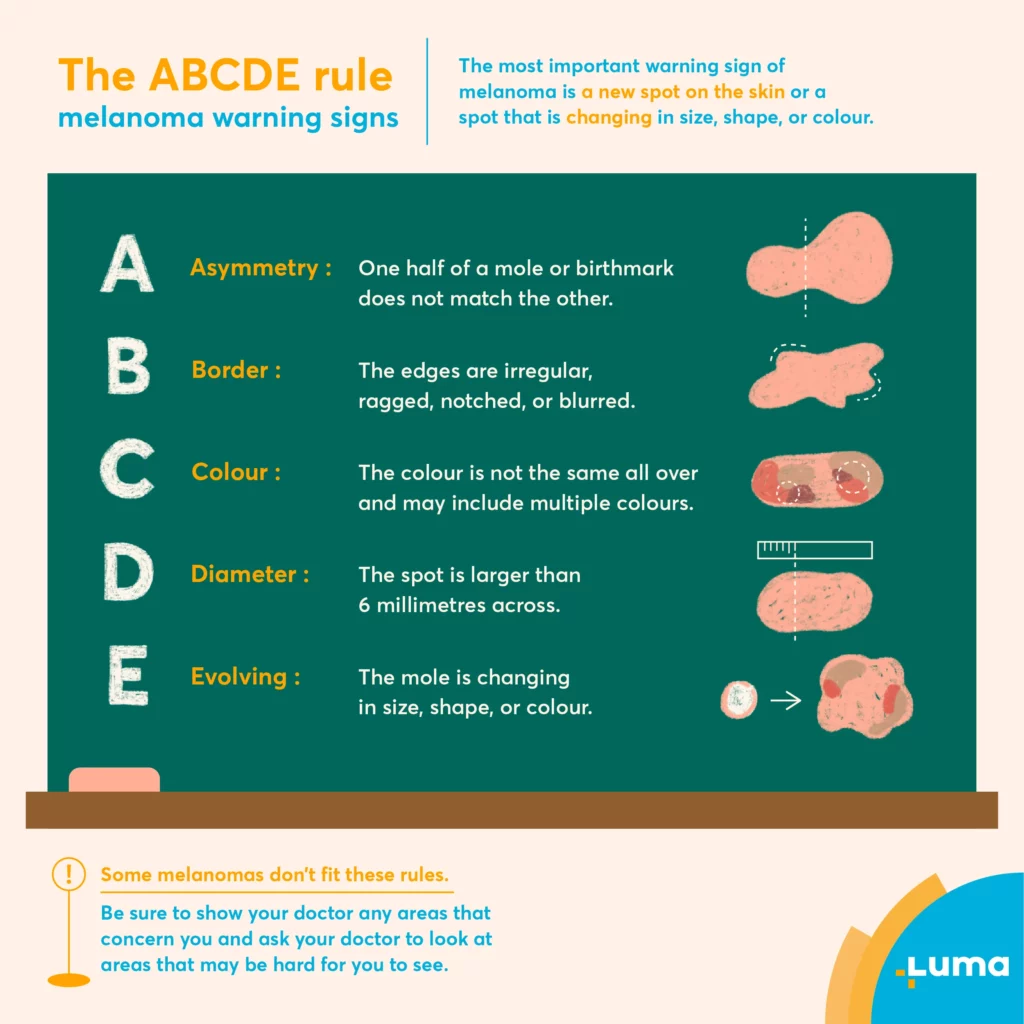
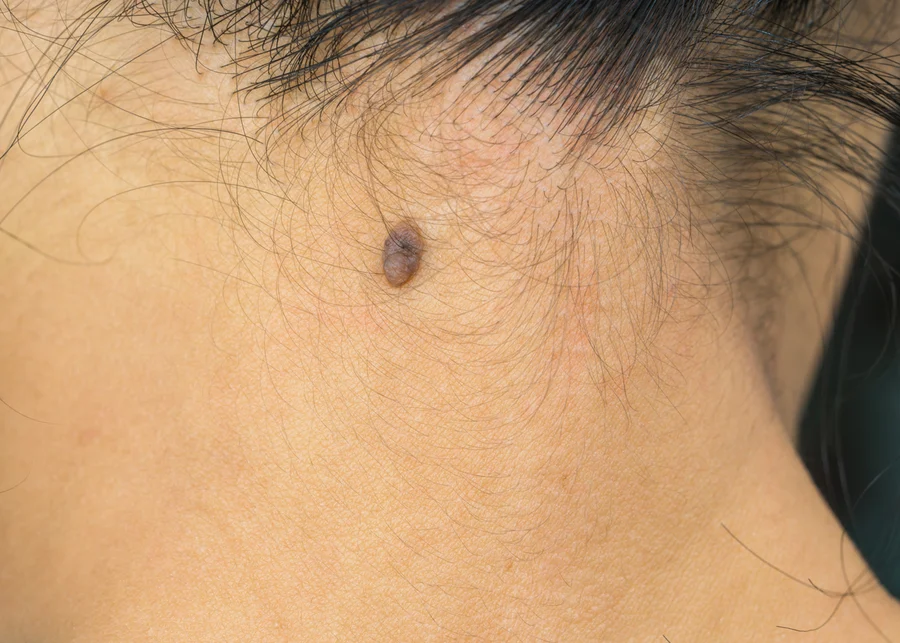
Malignant melanoma, also known as melanoma is an aggressive skin cancer that arises from the melanocytes, the cells that control skin pigmentation. Malignant melanoma, although represents only 4% of skin cancer cases, is responsible for 65% of all skin cancer-related deaths. Melanoma may occur in any area, regardless of sun exposure. It may begin as dark brown or flat black spot or develop from a pre-existing mole. The ABCDE rule can serve as useful warning signals for the signs and symptoms of most melanomas.

  • Asymmetry: one half of the mole does not match the other half
  • Border irregularity: the edges are ragged, notched, or blurred
  • Colour: the pigmentation is non-uniform, with variable degrees of tan, brown, or black
  • Diameter: diameter greater than 6 mm; about the size of a pencil eraser
  • Evolution, elevation, and/or enlargement of a lesion.
skin cancer

Myth: If you are wearing a sunscreen with SPF50+ you can stay in the sun for more time.

Fact: No, sunscreen should never be used to extend this amount of time you exposure your skin to the sun. In fact, SPF50 only gives you marginally better protection from UVB radiation. SPF30 filters 96.7% of UV radiation, compared to 98% of UV

    Not all changes in your skin are signs of cancer but visit your doctor as soon as possible if you notice any concerning change. Dermatological consultation usually involves examination of the skin while suspected skin lesion may be subjected to biopsy for further assessment. Early detection and treatment of melanoma might reduce death risk, while early detection and treatment of non-melanoma skin cancer might prevent major disfigurement.


Although mostly suspected in older, fair-skinned individuals, some studies have shown an increase in melanoma incidence among young individuals, aged 35 to 65 years. Risk factors such as immune suppression, gender, skin tone and age can all affect your likelihood of developing skin cancer. The American Academy of Dermatology recommends that those at highest risk, having a strong family history of melanoma and multiple atypical moles, should perform frequent self-examination and seek professional evaluation of the skin at least once per year.

black mole

Compared with other parts of the world, Thailand is among the low incidence-rate countries for malignant melanoma. As skin cancer prevalence is not as high as in Caucasian, availability of expert dermatologist on skin cancer in the local hospitals may be limited. Our guide to international hospitals in Bangkok may help you in choosing the best hospital available. Samitivej Hospital, for example, provides a comprehensive skin cancer screening program. If left untreated, skin cancer can spread to other parts of the body and can increase the incidences of developing other types of cancer.

As proper screening and diagnosis in a high-quality facility may be costly, a comprehensive health insurance can ensure a better access to all the available options. It will also provide coverage to cover the relevant medical tests that you should do as you aged. Our guide in choosing the best health insurance in Thailand can help you to search for one that suits you.

Myth: You can’t get burnt through a car window.

Fact: Untinted glass used in car windows can reduce, but not entirely block the transmission of UV radiation.

The Bottom Line

Despite the risk of skin cancer associated with sun exposure, healthy sun exposure is actually highly beneficial for vitamin D formation and is associated with a reduced risk of melanoma, hypertension, and numerous internal cancers. In fact, it has long been observed that outdoor workers have a lower incidence of melanoma than indoor workers.


In contrast, sunburns which indicate excessive exposure to sunlight are associated with a double risk of melanoma. A study shows that women who had five or more blistering sunburns between the ages of 15 and 20, compared to those that had none, have a higher risk of melanoma by 80%.

Skin Protection

Hence, prevention should be practised through proper protection from the ultraviolet radiation of the sun.

  • Avoid the sun during hours of high ultraviolet radiation – 10:00 to 16:00.

  • Clothing (made of thick material) that covers skin exposed to the sun

  • Use sunscreen (above SPF of 30 or more) that blocks both UVA and UVB radiation to all exposed skin

  • Apply sunscreen at least 30 minutes before exposure to the sun and reapply it every 2 hours

  • Moisturize your skin adequately to prevent degenerative damage to sun exposure

  • Using hats and wrap around sunglasses

  • Keep young children, especially babies younger than 6 months shield from the sun

  • Tanning bed should also be avoided as it can pose a risk of sunburn as well

  • Ensure you have comprehensive health insurance that cover preventative skin check ups.

Slip, Slop, Slap!

Related Readings

LUMA Care Application
Contact Us

Copyright © 2026 lumahealth.com. All Rights Reserved.   Privacy Policy & Terms of Conditions