
Did You Know The Symptoms of a Heart Attack are Different in Men and Women?

Heart attack or myocardial infarction is a serious medical emergency in which the blood supply to the heart is suddenly severely reduced or completely blocked. Diminished blood supply which causes lack of oxygen may cause serious damage to the heart muscle and can be life-threatening.


Heart attacks often come unexpectedly – having health insurance  is vital to ensure you have good health care services available to you.


Heart attacks occur mainly due to Coronary Artery Disease, in which there is a plaque buildup inside the coronary arteries, the blood vessels that feed the heart muscle. According to the latest WHO data published in 2017, coronary heart disease is the leading cause of deaths in Thailand which accounts for 12.61% of total deaths.

Plaque formed by the build ups of fat, cholesterol and other substances over many years (atherosclerosis) can cause narrowing of the arteries. If it ruptures, a large blood clot can form on its surface, completely blocking blood flow. Smoking, unhealthy diet, diabetes, old age, obesity and lack of physical activity can increase the risk of atherosclerosis.


Beside coronary heart disease, another cause of a heart attack is a spasm of the coronary artery that shuts down blood flow to part of the heart muscle. Use of tobacco and illicit drugs, such as cocaine, can cause the life-threatening spasm. A heart attack can also happen due to a tear in the coronary artery (spontaneous coronary artery dissection).


While the classic symptoms of a heart attack are chest pain and shortness of breath, gender differences may incur different manifestations. Heart attack symptoms in women are not always similar to those in men. Sometimes the symptoms can be so mild that women may miss them. Regardless of your gender, it’s also important to remember that each heart attack is different. Trust your instincts and act fast.


Symptoms of a heart attack in men include:

  • Chest pain/pressure, with a squeezing sensation that may come and go or remain constant and intense
  • Upper body pain or discomfort, including arms, left shoulder, back, neck, jaw, or stomach
  • Rapid or irregular heartbeat
  • Shortness of breath even when you’re resting
  • Dizziness
  • Stomach discomfort that feels like indigestion
  • Breaking out in a cold sweat

Symptoms of heart attack in women include:

  • Uncomfortable pressure or pain in the centre of your chest, which may spread to your arm
  • Shortness of breath
  • Unusual fatigue lasting for several days or sudden severe fatigue
  • Sleep disturbances
  • Anxiety
  • Lightheadedness
  • Indigestion or gas-like pain
  • Upper back, shoulder, or throat pain
  • Jaw pain or pain that spreads up to your jaw

heart attack symptoms

You may feel it is unnecessary to seek medical help if your symptoms are mild or vague. But you need to determine your medical needs based on what feels normal and abnormal for you. Don’t hesitate to get help if you haven’t experienced symptoms like this before.


A study in the European Heart Journal discovered that women with heart attack wait approximately 37 minutes longer than men before contacting medical services. As such, women are more likely to die due to heart attack than men with total in-hospital death due to heart attack was 24% in women compared to 14% in men (data from Thailand).
Do You Know These Breast Cancer Symptoms?

Many of us have heard about breast cancer, but not all of us are aware of the importance of early breast cancer screening to avert the spread of the disease throughout the body. Much like in other types of cancer, cells in the breast form a tumour that feels like a lump. This lump can develop in both men and women but is much more common in women. The tumour is malignant and deadly if the cells invade surrounding tissues or even worse, spread to other areas of the body.


In 2022, approximately 2.3 million women were diagnosed with breast cancer, which led to an estimated 670,000 deaths worldwide. Additionally, breast cancer was the most common cancer among women in 157 out of 185 countries that year.


Breast cancer is the most commonly occurring cancer among women. The risk factors of this cancer include genetics, increasing age, the density of breast tissue, estrogen exposure and hormone treatments. Yet, it is also associated with lifestyle elements such as dietary intake and alcohol consumption. Diets low in fiber, high consumption of caloric foods and a transition to a more Western diet may increase the chance of breast cancer. Sustaining a healthy, balanced lifestyle can help to reduce the risk of developing breast cancer. However, studies indicate that nearly half of all breast cancer cases occur in women who have no identifiable risk factors beyond their sex and age.

Prevalence of Breast Cancer in Thailand

Breast cancer remains the most prevalent cancer among Thai women. In 2022, there were 21,628 new cases, accounting for 23.2% of all female cancer diagnoses. The age-standardized incidence rate (ASR) is 37.4 per 100,000 women per year. Mortality data indicates that breast cancer is responsible for a significant number of deaths among Thai women, underscoring the critical need for early detection and effective treatment strategies.


Notably, the incidence of breast cancer has been increasing over the past two decades, with projections indicating a continued rise, particularly among women aged 50 and older. This trend highlights the importance of regular screenings and public health initiatives to promote early detection and improve survival rates.

Signs and Symptoms of Breast Cancer

There are many symptoms that might indicate a case of breast cancer. The main and most common symptom is a lump or mass in the breast or armpit areas, which feels different from surrounding tissue. However, some breast tissues are naturally lumpy and you should be aware of what feels ‘normal’ to you.

Other symptoms include the following:

  • Discomfort in the armpits or breast for a period of a month or more (Some breast pain can be normal, especially around the time of your period)
  • Pitting or redness on the skin of the breast
  • Rash around or on the nipples
  • Sunken or inverted nipples
  • Any sudden and unusual change in size, the shape of the breast or appearance of the nipples
  • Scaling, peeling, or flaking on the skin of the breast or nipples
  • Nipples discharging fluids other than breast milk, without squeezing it


If any of these symptoms sound familiar to you, please do not hesitate to seek medical attention. If in doubt, it is better to get checked out by a medical professional.


Breast cancer can be both invasive and non-invasive. Non-invasive tumour cells stay inside the lobules or ducts and have not yet broken out, but eventually can still become invasive. They are considered invasive when the cancer cells break out from their place of origin and invade close-by tissues and increase the risk of spreading to other parts of the body. Breast cancer is considered to occur in two forms, ductal carcinoma and lobular carcinoma, based on the place of origin.


Ductal carcinoma means that the cancer started in the milk ducts, this is the most common type of breast cancer.


Lobular carcinoma on the other hand begins in the lobules, which are the glands that produce milk.

How Often Should I Examine Myself?

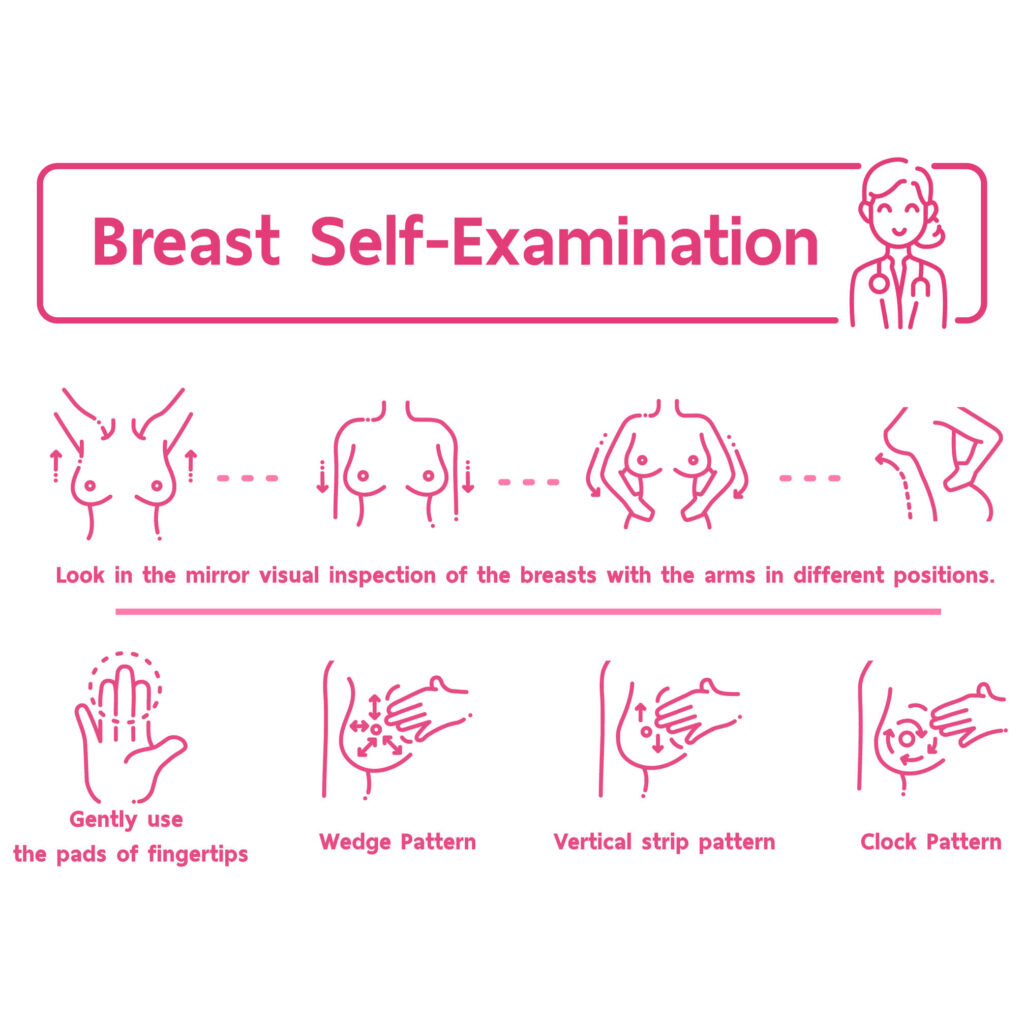
It is advised to do a breast self-exam routine on a monthly basis.


This regular check plays an important role as an early detection step and should be combined with other screening approaches. The more regularly you examine, the better you get to know what’s ‘normal’ for you and your breasts. It will become easier for you to spot any unusual changes, signs and symptoms if you’re checking regularly.


Have a good feel of the area around your breasts; the upper area, the outer area and the area around your armpits and collar bones as these areas often show the most prominent lumps or bumps. This applies to both men and women.


You may also start your own journal to track an account of your findings. Take note of the parts where you find lumps or unusual development, this may help you remember your body’s monthly changes. Women should be aware that throughout your monthly cycle your breasts will naturally change around the time of your period.


How Often Should I Go for A Mammogram?

There are several methods to detect breast cancer such as imaging tests like mammograms, ultrasound scans, and biopsies.


The mammogram is a type of x-ray test ordinarily used for initial screening and helps to detect any abnormalities around the breast area. The digital x-ray machine takes pictures from at least two different angles and creates a set of images called a mammogram. The risk of breast cancer increases with age and so it is very important for all menopausal women to do a mammogram at least once a year.


The American Cancer Society suggests that women between the ages of 40 and 44 can get yearly screening if they prefer, but women between the ages of 45 and 54 should do one each year. Research has already shown that doing mammograms regularly improves the rate of survival in breast cancer.


In addition to a mammogram, an ultrasound scan can discern between a solid mass or a fluid-filled cyst in the breast. An Ultrasound needs to be combined with a mammogram for more effective screening.


For further confirmation, a biopsy will be performed through laboratory analysis of a surgically removed sample of tissue. This method is used to determine whether the cells are cancerous, the type of cancer, and whether the cancer is hormone-sensitive or not.

Birth Control Pills: What You Need to Know Before Taking Contraceptive Pill

Over the years, many sexually active women have turned to contraceptive pills for the purpose of enjoying intercourse without having to conceive. However, contraceptive pills are so much more than just an effective form of birth control. In fact, women rely on them to debilitate and manage a number of health conditions which include polycystic ovary syndrome and extreme menstrual cramps. If you are planning to use them in the near future, this article will provide you with elaborate information to steer you into making an informed decision.


What Exactly is “The Pill”?

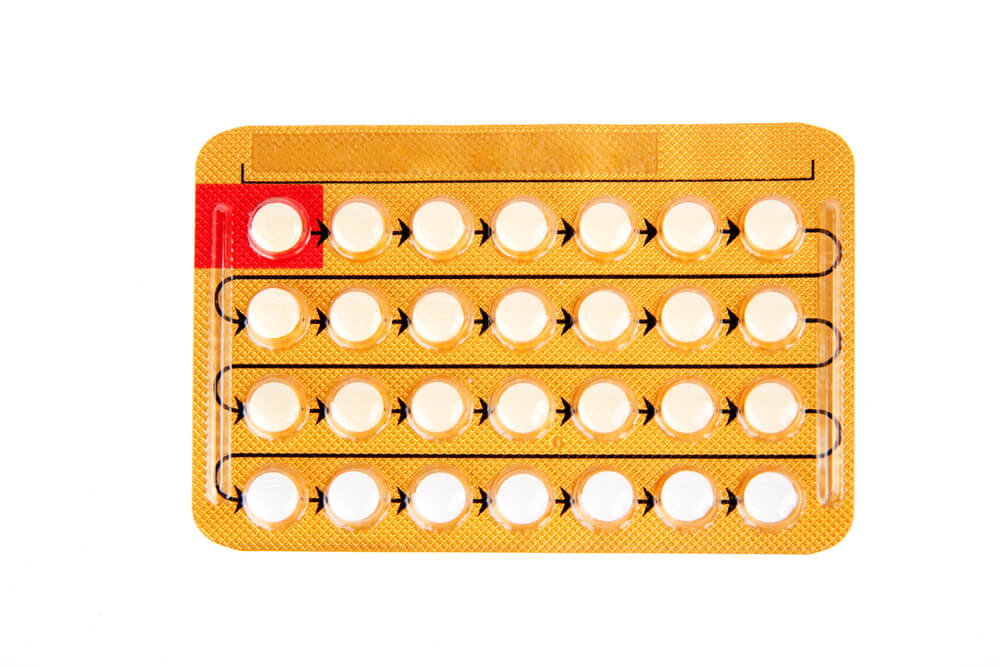
Contraceptive pills come in various forms, but the most commonly known form (“the pill”) consists of a mix between progestin and synthetic estrogen. Combined together, these pills are able to suppress ovulation, change cervical mucus to make it difficult for sperm to reach the egg, and change the lining of the uterus to make it harder for an egg to implant. There is also a progestin-only version of “the pill”, which can change cervical mucus and uterine lining. It too, may suppress ovulation, but it is not guaranteed and varies across women.

contraceptive pill

It is Able to Regulate Your Period Cycle or Stop it Altogether?

Apart from its primary function of birth control, contraceptive pills work effectively in regulating menstrual cycles for women who suffer from irregular and painful periods on a monthly basis. In fact, continuously ingesting “the pill” can result in your period stopping altogether.


By incorporating a continuous or extended-cycle regimen, women will be able to prevent hormonal changes responsible for bleeding, cramping, headaches and other period-related discomforts. For women suffering from iron deficiency due to heavy bleeding, incorporating a continuous regimen of contraceptive pills is able to reduce bleeding and decrease their risk of suffering from iron deficiency in the future. 

It Can Help You Manage Polycystic Ovary Syndrome

Polycystic ovary syndrome (PCOS) is a health condition that causes a woman’s ovaries to enlarge, whilst developing small cysts on the external edges. Ingesting birth control pills for the management of PCOS is able to initiate three main functions. Firstly, it protects the uterus by ensuring regular ovulation. This is because being unable to ovulate regularly increases the build-up of uterine tissue, which may increase your risk of developing ovarian cancer.


Secondly, it aids in reducing excessive male hormone levels in the body, especially testosterone. Regular consumption of “the pill” will enable you to alleviate some of the symptoms of PCOS, which include acne, male pattern baldness, and unwanted facial and body hair. Thirdly, it is able to protect women from being pregnant, especially if they have an ovulation cycle that is difficult to track.

It Comes With Its Own Set of Side Effects

If you have not ingested a contraceptive pill previously, it may take a little longer than usual for your body to adjust to the external hormones that come as a package with the pills. As a result, you may experience a few side effects after ingesting. One of the most common side effects experienced after ingesting a contraceptive pill is nausea. The duration in which nausea can last depends on your body’s reaction to the pill. For some, it may last for a couple weeks, whilst for others it may take up to three months to get better. This feeling of nausea will also be accompanied by bloating, which is caused by water retention in the body as a result of the hormonal changes that come with contraceptive pills.


Besides that, the combination of progestin and estrogen used in birth control pills can affect your mood, leading to mood swings. Estrogen in high doses has been known to cause fear and anxiety in women, while progestin can induce irritability, depression, and anxiety as well. In addition to this, women on “the pill” may also suffer tenderness in the breast.  This is because the hormones used in combined or progestin-only pills can stimulate breast tissue, resulting in anything from minor discomfort to enlargement of your breasts. Breast tenderness will usually dissipate on its own, but some women may experience regular discomfort if they continue ingesting contraceptive pills.


Every woman is different, which means that you may not find a contraceptive pill that is unique to you at your maiden attempt. Therefore, it is important to understand the pros and cons of contraceptive pills before deciding to take them. And if you do decide to go ahead with the pills, be aware of the possible negative side effects that you may experience. If something unusual occurs, or if you are uncomfortable with the side effects experienced, consult your doctor immediately regarding the possibility of replacing your prescription with a better suited alternative.


If you decide to Stop the Birth Control Pill and you want to become a mother, at LUMA, we believe mothers-to-be should focus on the joy of pregnancy—and not have to worry about money. That’s why we offer a health insurance package that covers your maternity costs when you sign up with us 10 months before your due date. Want to learn more?

Contact us today.

LUMA Care Application
Contact Us

Copyright © 2026 lumahealth.com. All Rights Reserved.   Privacy Policy & Terms of Conditions