


A cancer diagnosis is difficult enough on its own. For expats living in Thailand, it often brings a second layer of logistical and financial questions that can be harder to answer than the medical ones. When it comes to cancer treatment in Thailand, those questions quickly become as much about navigating the system as they are about the diagnosis.
- How long will the treatment last?
- What will the path look like month to month?
- How do we ensure the plan stays consistent from the first cycle to the last?
For one LUMA Hi5 member, the answers came through steady, end-to-end coordination across a 24-month immunotherapy course. While the treatment plan was complex and the timeline long, the clinical and financial outcome was exactly what they hoped for.
This is the story of how that care was managed, and what it demonstrates about navigating long-term cancer care as an expat in Thailand.
The Diagnosis and the Financial Dilemma
The member was diagnosed with a complex oncological condition and given a definitive treatment path by their oncologist: 24 months of immunotherapy. Immunotherapy is an advanced class of treatment that helps the body’s immune system recognize and fight cancer cells, making it a highly effective modern protocol for specific advanced solid tumors.
However, a two-year regimen requires an intensive, sustained schedule:
- Frequent treatment cycles: Administered typically every 3 to 4 weeks.
- Continuous monitoring: Regular blood work and quarterly diagnostic imaging (CT or PET scans).
- Specialist oversight: Constant evaluation to track therapeutic response and manage side effects.
The hurdle in this case was not the medicine itself, but the cost structure of the setting first proposed.
The member was covered under the LUMA Hi5 health insurance plan, which provides 5 million THB of medical coverage per policy year. The initial treatment plan proposed by a private international hospital came back at 14 million THB over 24 months. Even when split across two policy years, this created a projected 4 million THB out-of-pocket costs for the member.
The urgent priority shifted from simply choosing a hospital to finding an expert coordinator who could optimize the delivery of the plan.

Why Long-Course Cancer Care Benefits from Coordination
For expats in Thailand, the default route after a serious diagnosis is usually a private international hospital. While these facilities excel at short-term procedures or acute care, a 24-month medical itinerary introduces variables that benefit from an independent, medical review.
- Identical Protocols, Different Settings: A medical protocol is strictly defined by the specific oncology drug, the exact dosing schedule, and the clinical monitoring benchmarks. When two qualified centers deliver the same protocol to the exact same standard, the medical outcome is identical, but the underlying cost structure can vary significantly.
- The Medical Expertise of Academic Hospitals: Thailand’s leading university-affiliated academic hospitals, such as Siriraj, Ramathibodi, and Chulalongkorn, host some of the most experienced oncologists in Southeast Asia and run the country’s major medical research programs. Many also have private wings and international service options, so choosing an academic hospital does not have to mean a “downgrade” to a purely public healthcare setting. Because they operate on a public-academic model, their pharmaceutical costs and administration fees are often substantially lower than private commercial facilities.
- Multi-Year Administrative Alignment: A long-course plan involves dozens of appointments, rolling pre-authorizations, and complex billing streams. If these logistics are not proactively managed, a member risks administrative delays that can disrupt their strict treatment intervals.
How Medipro Coordinated the 24-Month Journey
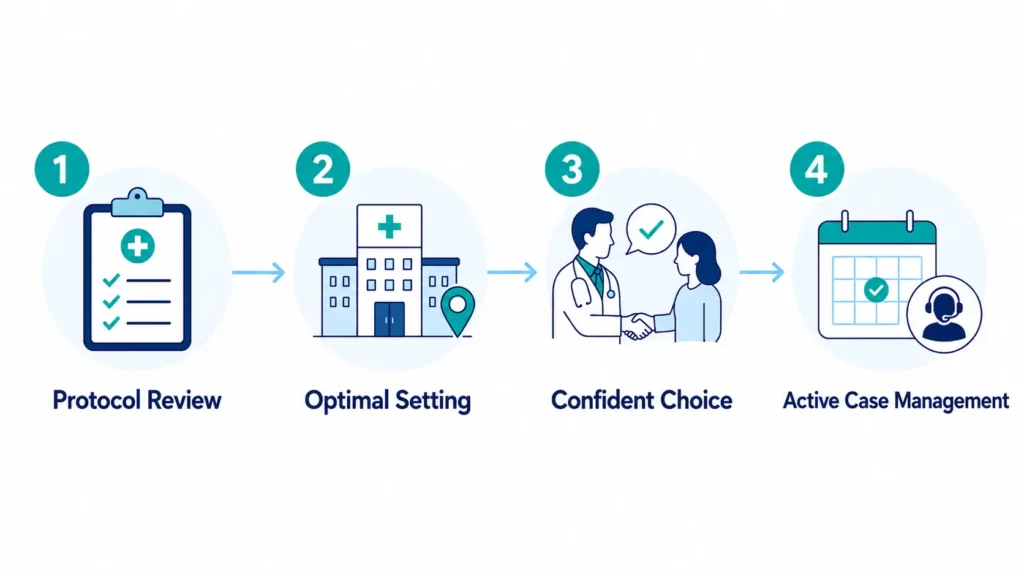
Medipro, LUMA’s dedicated medical case management partner, stepped in to review the case through a medical lens. Their role was to assess what options were available across Thailand’s entire healthcare network and build a sustainable pathway for the full 24 months.
Phase 1: Protocol Review
The Medipro medical team audited the diagnosis and the prescribed protocol in detail. They confirmed the exact immunotherapy agent, the precise milligram dosing schedule, and the specific diagnostic checks required over the two-year horizon.
Phase 2: Finding the Optimal Setting
Medipro mapped out alternative healthcare institutions in Bangkok capable of replicating the exact protocol. They identified a premier academic hospital where the identical immunotherapy regimen could be delivered under the care of a highly senior oncologist.
For many cases of cancer treatment in Thailand, this kind of review is where the biggest difference is made: not changing the protocol, but choosing a setting that can deliver it to the same standard with a more sustainable cost structure.
By utilizing the academic hospital’s cost structure, Medipro secured the complete 24-month treatment plan for 8 million THB, reduced from the original 14 million THB estimate. This adjusted cost fit perfectly within the member’s annual 5 million THB coverage limits across the two policy years.
Phase 3: Facilitating a Confident Choice
Choosing where to receive long-term treatment is deeply personal. Medipro supported the member by making the arrangements, connecting them with the right specialist, and confirming the treatment plan would remain the same before any changes were made. This ensured the member could move forward with confidence and on their own terms.
Phase 4: Active 24-Month Case Management
Over the next two years, Medipro remained actively involved. Case managers tracked the treatment calendar, coordinated rolling pre-authorizations before every cycle, and managed direct-billing lines between the hospital administration and the insurer, allowing the member to focus entirely on recovery.
The Outcome
The member proceeded through the 24-month immunotherapy plan as prescribed.
Key Metrics of the Coordinated Journey:
- Out-of-Pocket Cost: 0 THB
- Protocol Adherence: 100% consistency from the first cycle to the last
- Logistical Burden: Fully managed by Medipro case managers
While medical stabilization is always the most important goal, the continuity of the experience matters immensely. Eliminating financial stress and logistical friction provides a calmer, clearer path through two years of treatment, a key component of recovery.
Strategic Takeaways for Expats in Thailand
- The Initial Setting is Not the Only Setting: The hospital where you receive your initial diagnosis does not have to be the facility where you complete a multi-year care plan.
- Plan the Full Horizon Upfront: Long-course treatments require an upfront, full-timeline review rather than an appointment-by-appointment approach to prevent hitting annual policy caps mid-treatment.
- Local Academic Institutions Offer World-Class Care: Thailand’s premier academic hospitals possess deep clinical expertise and are often the strongest fit for complex, long-term oncology care.
For LUMA members, this level of clinical coordination is built directly into the policy framework. From the Hi5 plan upward, all tiers include direct access to Medipro case management for complex or long-term medical situations, ensuring you never have to navigate a serious diagnosis alone. For anyone navigating cancer treatment in Thailand, early coordination helps your health insurance benefits work as intended across the full timeline of care.
Frequently Asked Questions
Medical coordination manages the administrative, financial, and logistical complexities that surround clinical care. This includes auditing treatment protocols, evaluating alternative facility pricing, securing multi-year specialist access, and maintaining continuous pre-authorizations and direct-billing networks with the insurance provider.
Yes. As a LUMA member, you retain the right to select your treating facility, provided it is within your policy’s geographical area of cover. Contacting our medical team early allows us to confirm the facility’s network status and set up direct-billing arrangements to minimize upfront costs.
Institutions like Siriraj, Ramathibodi, and Chulalongkorn serve as the primary training grounds for the country’s medical specialists and lead regional oncology research. They operate with lower pharmaceutical and operational markups than private commercial hospitals, allowing patients to access identical, international-grade protocols at a much more sustainable cost structure.